Transforming Your Backyard Into a Budget-Friendly Oasis
Your backyard is one of the most underleveraged assets in your home. Most homeowners walk past it every day, mentally filing it under “someday” while it sits unused, overgrown, or just plain uninspiring. The good news: transforming that space into something genuinely beautiful and functional doesn’t require a six-figure renovation budget. It requires a plan.
The difference between a backyard that drains your wallet and one that actually delivers value comes down to sequencing, smart material choices, and knowing when to DIY versus when to call in a professional. This guide walks you through every major phase of a budget-conscious backyard transformation, from the initial assessment to the finishing touches that tie your indoor and outdoor spaces together. Whether you’re starting with a blank slate or working around existing structures, these strategies will help you build something you’re proud of without financial regret.
Assess What You Have Before Spending a Dollar

The single most expensive mistake homeowners make is skipping the audit phase and jumping straight into purchases. Before you spend a dollar on materials, plants, or contractors, spend a weekend taking stock of what you’re actually working with.
Walk your yard at different times of day and note the following:
- Where does water pool after rain, and where does it drain naturally?
- Which areas get full sun, partial shade, or deep shade throughout the day?
- Are there existing structures (fences, patios, sheds) worth preserving or repurposing?
- Where are the utility lines, and have they been properly marked?
- What does the soil look like — compacted clay, sandy, or workable loam?
This assessment directly shapes every decision that follows. Skipping it is how homeowners end up installing a gorgeous garden bed in a drainage problem zone, or building a deck over a utility easement that requires tearing it out two years later.
Once you have a clear picture of your space, a home improvement project becomes much easier to scope accurately. Knowing your constraints upfront means your budget goes toward solutions, not surprises. It also gives you a realistic sense of which upgrades will deliver the highest return on investment, whether your goal is resale value, personal enjoyment, or both.
For a more expert read on your space, consider bringing in a landscaping contractor for a one-time consultation before committing to any major work. Many contractors offer initial assessments for a flat fee or even for free, and that hour of professional input can save you thousands in misallocated spending. Come prepared with photos, measurements, and a list of goals so you get specific, actionable recommendations rather than a generic pitch for a full-service package.
Choose Ground Coverings That Look Expensive But Aren’t
The surface underfoot sets the entire tone of an outdoor space. It’s also one of the first areas where budgets spiral when homeowners default to premium materials without exploring what else is available at a lower price point.
Natural stone pavers and hand-laid brick are beautiful, but they carry costs that are hard to justify on a tight budget. Stamped concrete delivers a remarkably similar aesthetic at a fraction of the price. It can be finished to mimic slate, cobblestone, flagstone, or wood grain, and it holds up well in most climates when properly sealed and maintained. For patios, pool decks, and walkways, stamped concrete is one of the highest-value investments you can make in terms of visual impact per dollar spent. The key is working with an experienced installer, since the quality of the finished product depends heavily on technique.
When you’re ready to move beyond the patio surface and into retaining walls, raised planters, steps, or decorative borders, that’s where a hardscaping contractor becomes a valuable partner. Hardscape refers to the non-plant, structural elements of a landscape, and getting these right early in the project prevents costly rework later. A good hardscaping contractor will also flag potential drainage or grading issues before they become expensive problems. When comparing bids, ask each contractor to walk you through their material recommendations and why. The lowest bid isn’t always the best value if it involves cutting corners on drainage prep or base compaction.
Add Usable Outdoor Living Space Without Overbuilding
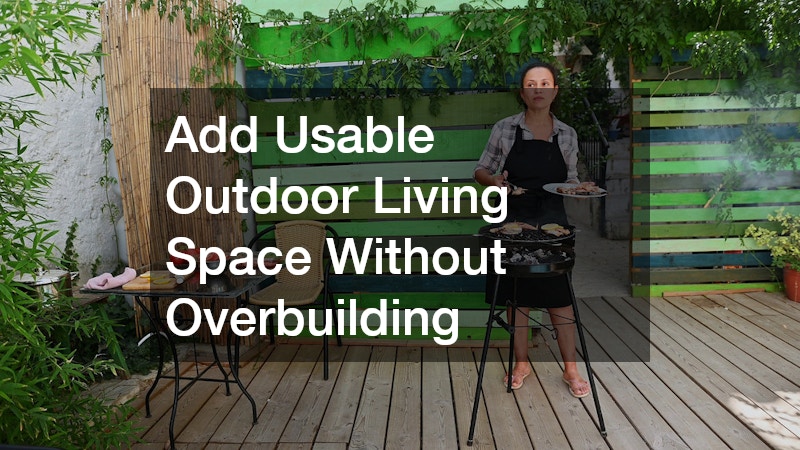
One of the most common and costly mistakes in backyard renovations is building more than you actually need. A 600-square-foot deck for a family that hosts twice a year is an expensive underperformance. The goal is to build for how you actually live, not for an idealized version of how you imagine using the space.
Working with custom deck builders gives you a significant advantage over buying prefabricated kits from a home improvement warehouse. Custom builders can design around your home’s specific architecture, account for grade changes, and specify materials that match your aesthetic without unnecessary upgrades. They also handle permitting, which is non-negotiable for any structure attached to your home. Before hiring, ask to see three or four completed projects, get references from homeowners who are at least two years post-build (so minor issues have had time to surface), and ask about their warranty on labor versus materials.
For outdoor kitchens, the smartest approach on a budget is to think in phases rather than trying to build everything at once. Phase one might be a quality freestanding grill, a small prep table, and a weatherproof storage unit. Phase two, a year or two later, could add a built-in grill with a concrete countertop and a compact refrigerator. Phase three might eventually include a pizza oven, a sink, or overhead coverage. This phased approach lets you live with the space before committing to permanent installations, which almost always leads to better design decisions.
Plan Your Planting Strategy to Cut Ongoing Costs
Plants are where outdoor renovation budgets quietly and consistently spiral. Homeowners buy what looks good at the nursery, plant it without a plan, lose half of it to the wrong conditions, and start over. A more strategic approach saves both money and frustration.
Investing in periodic garden services is one of the more underrated budget decisions a homeowner can make. Rather than calling for help only when the yard is in crisis mode, working with a garden services provider on a seasonal schedule (spring prep, midsummer maintenance, fall cleanup) keeps everything healthier and more manageable year-round. These providers can also advise on plant selection for your specific climate and soil conditions, which dramatically improves your survival rate for new plantings. Ask for itemized quotes so you understand exactly what each visit covers and can scale services up or down based on your budget.
Water management is the other major cost lever that homeowners frequently overlook. A smart irrigation system pays for itself relatively quickly through reduced water bills and fewer plant losses from inconsistent watering. Modern smart irrigation systems connect to weather data and soil moisture sensors to water only when and where it’s actually needed, eliminating the waste of a fixed timer schedule. Entry-level smart controllers can be retrofitted onto existing sprinkler systems for a few hundred dollars, making this one of the most accessible upgrades in this entire guide.
Refresh Your Home’s Exterior to Tie the Whole Look Together
A beautifully landscaped backyard loses a significant amount of its visual impact when the home’s exterior looks tired, dated, or mismatched. The transition between your indoor and outdoor spaces is a design zone that deserves deliberate attention, and you don’t need a full exterior renovation to make it work.
Exterior doors are one of the highest-impact, most cost-effective upgrades you can make to strengthen that indoor-outdoor connection. If your backyard is accessed through sliding glass doors, French doors, or a standard back entry, the condition and style of those doors directly affect how the space feels. A fresh coat of weather-resistant paint, updated hardware, or a full door replacement can completely reframe the visual relationship between your home and your outdoor space. For homeowners on a tight budget, refinishing an existing solid wood door and replacing the hardware is often a small project that looks high-budget.
For homes where the kitchen opens toward the backyard or a patio-facing window creates a visual line between the two spaces, refreshing your kitchen cabinets can create a surprising amount of visual continuity. Full cabinet replacement is expensive and rarely necessary. Repainting cabinet fronts in a color that complements your outdoor palette, swapping hardware for brushed brass or matte black, or adding glass-front doors to upper cabinets that face the yard are all budget-conscious moves that create cohesion between inside and out. The goal is to make the transition feel intentional rather than coincidental.
Prioritize Projects for Maximum Impact on a Tight Budget
One of the most paralyzing parts of a backyard transformation is figuring out where to start when you can’t do everything at once. Prioritization isn’t just a financial strategy. It’s also a design strategy, because the order in which you execute projects affects what’s possible in later phases.
Here’s a general sequencing framework that works for most budgets:
Start with structure and drainage. Grading issues, drainage problems, and major hardscape elements should come first. Everything built on top of a drainage problem will eventually suffer from it.
Then address permanent surfaces. Patios, walkways, and decks come next, since they define the functional zones of your yard and influence where plants, lighting, and furniture will go.
Layer in planting and irrigation. Once your surfaces are set, install your irrigation system before planting. Trenching through an established garden bed is disruptive and expensive.
Add lighting, furniture, and accessories last. These are the easiest elements to swap out or upgrade over time, so there’s no reason to commit a large portion of your budget to them early.
Quick wins to do anytime: Fresh mulch, a coat of paint on a fence, power washing existing concrete, and adding a few large container plants are low-cost, high-visibility upgrades that can dramatically improve the look of a space while you save for larger projects.
Phasing your project across seasons or even years also gives you the benefit of living with each change before making the next one. What seems like the perfect location for a fire pit in the planning stage might turn out to be directly downwind of your favorite seating area once you’ve actually spent a summer in the space.
Find the Right Professionals Without Blowing Your Budget

Knowing when to hire and how to hire well is one of the most important skills in any home renovation project. The backyard is no different. The wrong contractor can turn a reasonable budget into a financial disaster, while the right one can stretch your dollars further than you expected.
A few principles that apply across every trade:
- Get at least three bids for any project over $2,000. Not to automatically choose the lowest, but to understand the range and what each contractor is or isn’t including.
- Ask about off-season timing. Many landscaping and hardscape contractors are significantly more negotiable on price between late fall and early spring, when demand drops.
- Request itemized quotes, not lump sums. Itemized quotes let you see exactly where the money is going and identify line items you might be able to supply yourself (like materials you source independently).
- Check licensing, insurance, and references. This isn’t optional. A contractor who can’t provide proof of liability insurance is a financial liability for you if something goes wrong on your property.
- Clarify the payment schedule upfront. A reputable contractor should never require more than a third upfront. If someone asks for half or more before work begins, that’s a red flag.
The best contractor relationships are ones where you’ve done enough research to have an informed conversation. Know your priorities, know your constraints, and communicate both clearly from the first meeting. Professionals respect clients who’ve done their homework, and that respect often translates into better service and more creative problem-solving within your budget.
A budget-friendly backyard transformation isn’t about cutting corners. It’s about making deliberate choices, sequencing projects intelligently, and investing where the return is highest. Start with a clear-eyed assessment of your space, anchor the design with durable surfaces, build for how you actually live, and treat the connection between your home’s interior and exterior as part of the overall design.
You don’t need to do it all at once. The most satisfying outdoor spaces are often built gradually, one thoughtful decision at a time. Pick your starting point, execute it well, and let each phase inform the next. Your backyard oasis is more attainable than you think.