Property Improvements to Consider for a Whole-Home Exterior Refresh
Refreshing a home’s exterior is an opportunity to improve more than appearance. The right projects can make a property easier to maintain, more comfortable to use, and better prepared for changing weather throughout the year. Because so many exterior features work together, homeowners often get better results when they think about the house, yard, drainage, entrances, and outdoor living areas as parts of one overall plan.
A whole-home exterior refresh does not have to happen all at once. Some homeowners begin with urgent repairs, while others focus on upgrades that improve convenience or create more usable outdoor space. Roof condition, siding, gutters, doors, trees, landscaping, hard surfaces, and garage access can all influence how the property functions. Looking at these elements together can also help prevent one project from interfering with another.
Before work begins, it is helpful to identify priorities, set a realistic budget, and consider which improvements should happen first. Structural and water-management concerns usually deserve attention before decorative changes. Once those essentials are addressed, homeowners can move on to upgrades that add comfort, privacy, shade, and visual appeal. A coordinated approach can make the entire property feel more polished while supporting daily routines for years to come.
Evaluate the Roof, Gutters, and Drainage First
The roof and drainage system should be among the first areas reviewed during an exterior refresh because problems at the top of the home can affect everything below. Missing shingles, damaged flashing, clogged gutters, and poorly directed downspouts can allow water to reach siding, trim, foundations, walkways, and landscaping. Addressing these issues early can help homeowners avoid making cosmetic upgrades that later need repair.
Local roofing contractors can inspect the roof for visible wear, storm damage, soft areas, ventilation concerns, and aging materials. Depending on the condition of the system, a homeowner may need targeted repairs or a larger replacement project. It is also useful to ask how the roof interacts with chimneys, skylights, vents, and nearby tree branches, since these areas can create additional maintenance needs.
Local gutter services can help with cleaning, repairs, replacement, and adjustments to improve how rainwater moves away from the home. Gutters should be securely attached, properly pitched, and free of obstructions. Downspouts should discharge water where it will not create puddles near the foundation or wash out planting beds.
Update Siding and Exterior Surfaces
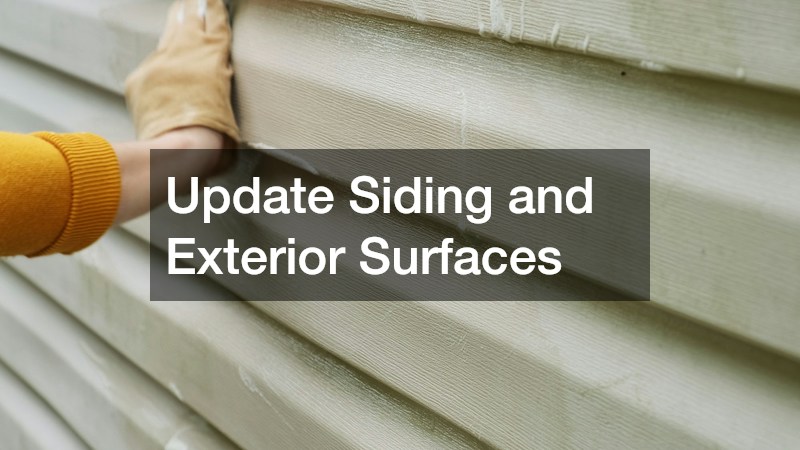
Siding covers a large portion of the home, so its condition has an influence on both appearance and weather protection. Cracked panels, loose sections, fading, rot, gaps, and moisture stains can signal that repairs or replacement should be considered. Even when siding is structurally sound, updating it can change the overall character of the property.
A siding company can help homeowners compare materials based on climate, maintenance expectations, durability, and style. Vinyl, fiber cement, engineered wood, and other products each have different care requirements and installation methods. The best choice depends on the home’s design and the amount of upkeep the household wants to manage.
Color selection deserves thought because siding should coordinate with roofing, trim, doors, garage doors, and permanent hardscape materials. Homeowners do not need every exterior element to match, but the finishes should feel intentional together. Testing samples outdoors at different times of day can help reveal how colors look in changing light.
This is also a good time to inspect soffits, fascia, trim, shutters, and exterior caulking. Small details can make newly updated siding look more complete. If several materials meet at corners, windows, or rooflines, proper flashing and sealing are important for limiting moisture intrusion and creating a finished appearance.
Improve Entryways and Everyday Access
Exterior doors affect security, energy efficiency, convenience, and the way people move in and out of the home. A front entry may be the visual focal point, but side doors, patio doors, and garage access doors are equally important for everyday routines. Sticking doors, damaged frames, worn thresholds, and poor weather sealing can make an entrance frustrating to use.
New door installations can improve function while giving homeowners an opportunity to update style, hardware, glass, and color. Before selecting a door, it is important to measure the opening carefully and evaluate the frame. In some cases, replacing only the door slab is possible, while other situations require a complete prehung unit.
Families should consider how each entrance is used. A heavily used back door may benefit from durable materials and easy-to-clean finishes, while a front door may place more emphasis on architectural detail. Storm doors, sidelights, transoms, and decorative glass can also influence light and ventilation.
Lighting should be part of the entryway plan. Fixtures near doors, steps, and walkways make evening access easier and can help visitors navigate safely. House numbers should remain visible from the street, and paths leading to entrances should be kept clear. When door improvements are coordinated with siding and trim updates, the entrance can feel like a natural part of the refreshed exterior.

Upgrade the Garage for Better Function
The garage door is one of the largest moving components on many homes, and it often occupies a significant portion of the front exterior. An outdated or damaged door can affect both convenience and curb appeal. Noisy operation, slow movement, uneven travel, broken panels, or unreliable opening can indicate that service is needed.
A garage door company can inspect the door, tracks, rollers, springs, opener, sensors, and weather seals. Some problems can be repaired, while older systems may benefit from replacement. Homeowners should avoid attempting adjustments to high-tension springs or cables themselves because these components can be dangerous without proper tools and training.
When selecting a replacement, homeowners can consider insulation, material, window placement, panel style, and finish. The door should coordinate with the home’s architecture rather than compete with it. A simple design may work well on a modern house, while carriage-style details may complement more traditional exteriors.
The area around the garage deserves attention too. Exterior lighting, driveway condition, drainage, and storage habits can all influence how functional the space feels. Sealing gaps around the garage door may also help reduce drafts and keep leaves, pests, and debris from entering. A well-maintained garage entrance supports daily routines while contributing to a cleaner exterior appearance.
Create More Comfortable Outdoor Living Areas
A whole-home refresh can extend beyond the building itself. Outdoor living areas give families places to relax, dine, entertain, and spend more time outside. Patios, decks, shade structures, and screened areas can make the yard more useful, especially when they are designed around how the household actually spends time outdoors.
Automated pergola services can help homeowners create adjustable shade in patios and seating areas. Some systems use motorized louvers that open or close depending on sun, rain, and personal preference. This flexibility can make an outdoor space comfortable during more parts of the day without permanently blocking natural light.
A motorized screen can provide another layer of comfort by helping create shade, privacy, or protection from insects when needed. Screens can be lowered during meals or evening gatherings and retracted when homeowners want a completely open view. Placement should account for wind exposure, surrounding structures, and how frequently the area will be used.
Outdoor improvements should also include practical details such as lighting, electrical access, furniture placement, and clear walking paths. A beautiful space can still be inconvenient if people have to cross wet grass to reach it or if there is nowhere to store cushions and accessories. Planning these elements together helps the area function like an extension of the home.

Reshape the Yard With Landscaping and Trees
Landscaping has a major effect on how an exterior refresh comes together. Overgrown shrubs, crowded planting beds, unhealthy trees, and poorly placed vegetation can hide architectural features and make maintenance more difficult. A thoughtful landscape plan can improve visibility, shade, privacy, and the overall balance of the property.
Landscaping contractors can help homeowners choose plants based on sunlight, soil, drainage, mature size, and maintenance needs. It is important to plan for how shrubs and trees will grow rather than selecting them only for how they look at installation. Plants placed too close to walls, walkways, or utility equipment can create problems later.
Tree removal services may be appropriate when trees are dead, severely damaged, unstable, or located where roots and branches create ongoing concerns. Removing a tree can also open space for a patio, lawn, garden, or new planting plan. However, homeowners should consider how removal will affect shade and privacy before making a final decision.
Healthy trees that remain on the property may need trimming to improve clearance around the roof, driveway, or outdoor structures. Ground-level landscaping should also be kept away from siding and vents where excessive moisture or blocked airflow can become an issue. A balanced yard should complement the house without overwhelming it.
Add Structure With Hardscaping
Hardscaping can organize outdoor spaces and make them easier to navigate. Walkways, patios, retaining walls, steps, edging, and other built features create structure within the landscape. These elements can define gathering areas, connect entrances, manage elevation changes, and reduce the amount of lawn that requires regular maintenance.
Material selection should account for climate, drainage, slip resistance, and the architectural style of the home. Concrete, brick, natural stone, and pavers each offer different appearances and maintenance requirements. The goal should be to choose materials that coordinate with siding, roofing, and other permanent exterior finishes.
Drainage is especially important when adding new hard surfaces because water can no longer absorb into the soil in the same way. Patios and walkways should be graded so water moves away from foundations and does not collect in low areas. Retaining walls may also require drainage features behind them to reduce pressure from saturated soil.
Homeowners should think about movement through the yard before finalizing a layout. Paths should connect areas people actually use, such as the driveway, front door, patio, garden, and garage. Well-planned hardscaping can reduce muddy routes and create clearer transitions between different outdoor zones.
Lighting can make these features safer after dark. Step lights, path lights, and subtle landscape fixtures can improve visibility without making the yard feel overly bright. Coordinating hardscape and landscape plans often produces a more cohesive result than treating them as separate projects.

Coordinate Projects for a Cohesive Exterior Refresh
A successful exterior refresh depends on more than choosing attractive individual upgrades. The order of the work matters. Roofing and gutter repairs should usually be handled before new siding, while major tree work may be easier before delicate landscaping or new outdoor structures are installed. Hardscape projects may also need to happen before planting so equipment can reach the work area without damaging finished beds.
Homeowners can create a simple project sequence based on urgency, disruption, and dependencies. Water intrusion, structural concerns, and safety problems should come first. After those issues are resolved, projects can move toward appearance, convenience, and outdoor comfort.
It is also useful to choose a consistent group of materials and colors. Roofing, siding, doors, garage finishes, paving, and landscape features do not need to match exactly, but they should relate to one another. Repeating a few colors or textures can make the property feel intentionally designed.
Budget planning should include preparation and follow-up work, not just the visible upgrade. Removing old materials, repairing hidden damage, adjusting drainage, restoring planting beds, and cleaning construction areas can all add to the final cost. Building some flexibility into the budget can make unexpected conditions easier to manage.
A whole-home exterior refresh is most effective when every project supports the way the property is used. Some homeowners may prioritize low maintenance, while others want more entertaining space, stronger curb appeal, or easier access. By reviewing the entire exterior before committing to individual improvements, homeowners can make decisions that work together.
The result should be a property that feels more functional as well as more finished. Coordinated roofing, drainage, siding, doors, garage features, landscaping, trees, hardscape, and outdoor living improvements can make everyday routines easier while giving the home a consistent appearance. Careful planning also allows homeowners to complete projects in stages without losing sight of the larger goal.